
XUGO Outdoor · B2B Rooftop Tent Buyer Guide
Hard Shell vs Soft Shell Rooftop Tents: A B2B Buyer’s Sourcing Guide
Compare hard-shell and soft-shell rooftop tents for wholesale, distribution and private-label programs. Use product specifications, vehicle fit, packing requirements and target-market needs to make a sourcing decision.
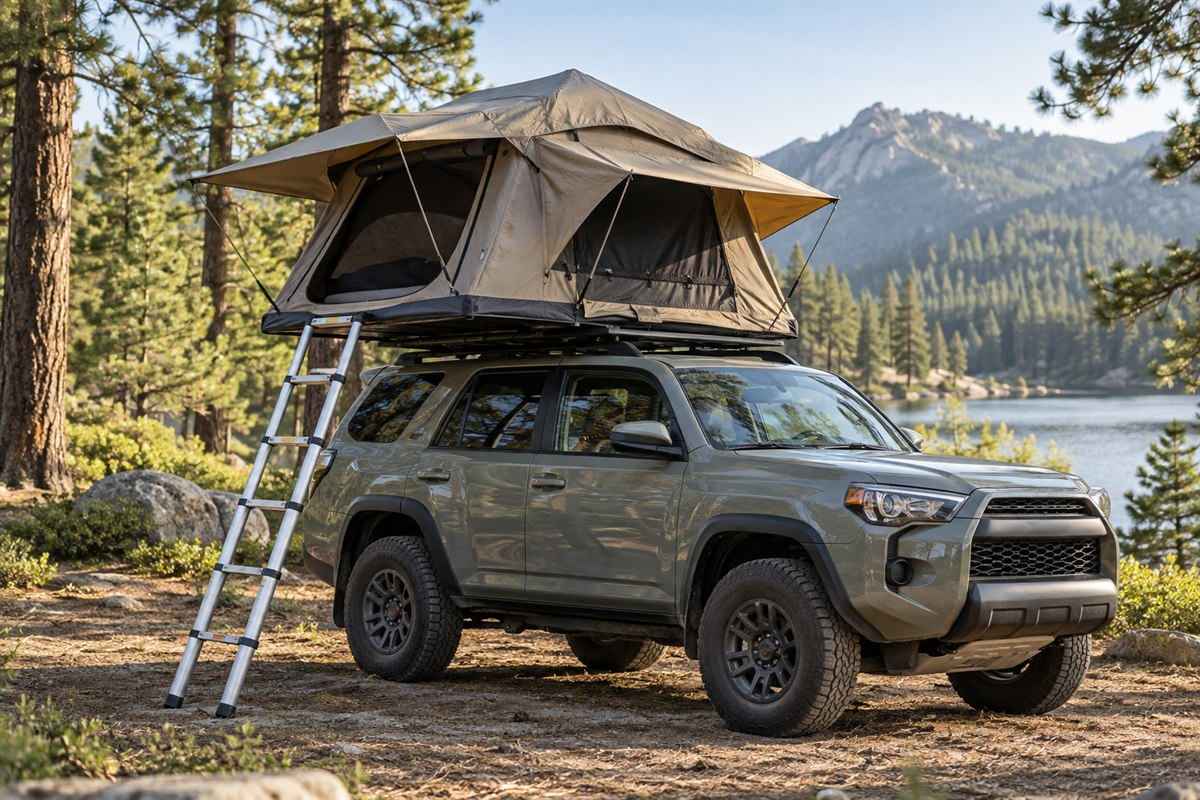
Quick Answer: Which Rooftop Tent Type Fits Your Program?
Neither design is right for every buyer. Hard-shell and soft-shell tents involve different tradeoffs in opening method, packed shape, vehicle compatibility, product configuration and price positioning. For B2B sourcing, compare the exact models and included components rather than relying on the category name alone.
Decision framework
Key Takeaways for Importers and Distributors
Compare the actual design
“Hard shell” and “soft shell” describe broad product formats. Opening mechanism, shell material, fabric, frame and included components vary by model.
Confirm vehicle and rack requirements
Ask for product weight, mounting details and the information needed to verify compatibility with the vehicle and roof or bed rack.
Compare complete order scope
Include packaging, accessories, sample approval, MOQ, lead time and customization when comparing quotations.
Match the format to your channel
Use your customers’ vehicle types, trip patterns, storage needs and target price to decide which design belongs in your assortment.
01 / Product architecture
How Do Hard-Shell and Soft-Shell Rooftop Tents Differ?
A hard-shell rooftop tent uses a rigid outer shell as part of its closed travel profile. A soft-shell rooftop tent generally folds into a travel cover and opens into a fabric sleeping space. The labels do not tell a buyer every detail: shell materials, frame design, opening mechanism, dimensions and accessory package need to be checked for each model.
For a wholesale buyer, the practical comparison is not simply which format is “better.” It is which model meets the target customer’s expectations while fitting the vehicle, retail price, freight plan and quality requirements.
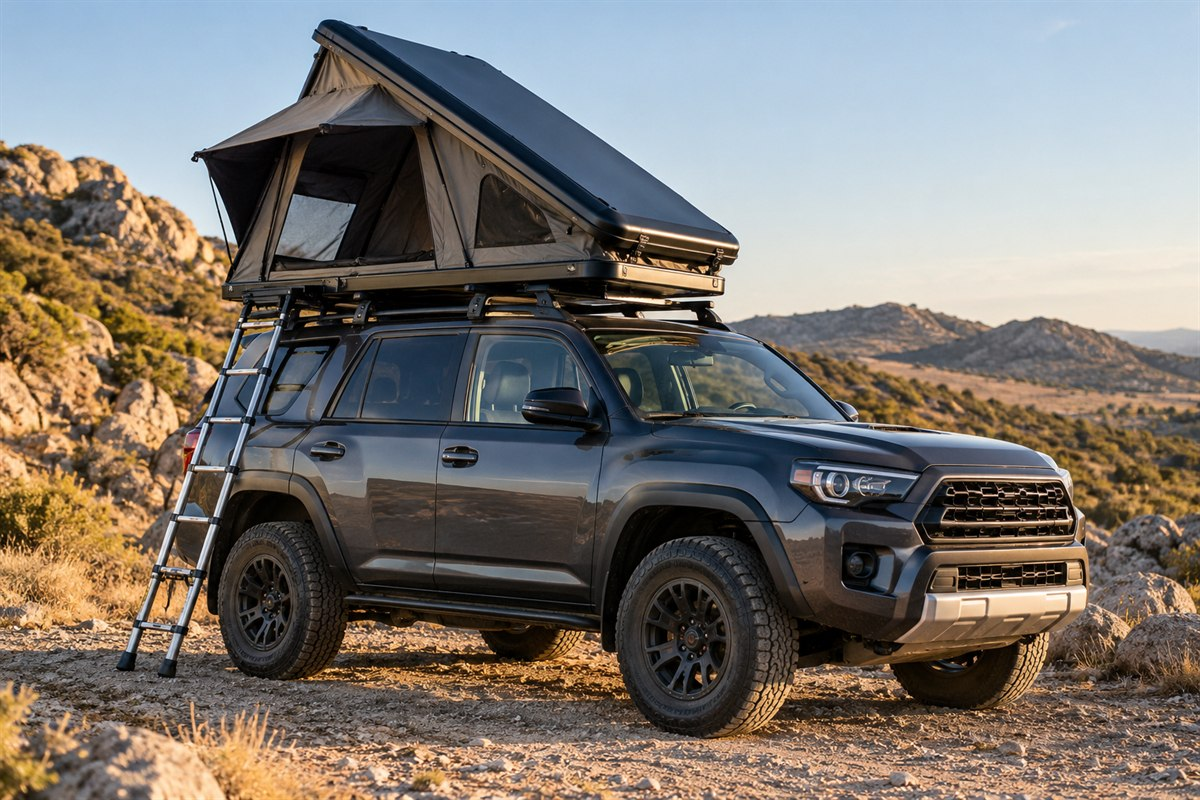
The product name is only the starting point
Before comparing suppliers, define the exact tent model, structure, sleeping capacity, vehicle type, target price, sales channel and accessories. This creates a shared baseline for samples and quotations.
02 / Comparison
Hard-Shell vs Soft-Shell Rooftop Tents: Buyer Comparison
Use this table to structure a model review. The answers depend on the specific product, so ask suppliers to document the relevant details instead of treating category-level assumptions as specifications.
| Buyer factor | Hard-shell model: verify | Soft-shell model: verify | B2B sourcing question |
|---|---|---|---|
| Opening method | Shell type, hinge or lift mechanism, opening and closing steps | Fold-out process, poles, cover handling and setup sequence | Can the supplier provide a setup demonstration for the exact model? |
| Packed profile | Closed height, outer dimensions and mounted profile | Closed dimensions, travel cover and fastening details | What are the packed dimensions and product weight? |
| Sleeping space | Open dimensions, usable layout and mattress specification | Open footprint, annex options and sleeping layout | Which dimensions and capacity can be documented? |
| Vehicle fit | Mounting points, rack compatibility and clearance | Mounting points, rack compatibility and deployed clearance | What vehicle and rack information must the buyer check? |
| Construction | Shell material, frame, hinges, latches and seals | Fabric, frame, seams, poles and travel cover | Which materials and test information apply to this model? |
| Order economics | Unit cost, carton size, accessories and MOQ | Unit cost, carton size, accessories and MOQ | Are quotations based on the same order quantity and pack-out? |
Vehicle load limits and rack requirements vary by vehicle and equipment. Buyers should verify the applicable vehicle and rack documentation for the intended setup.
03 / Technical information
Specifications to Request Before Comparing Quotations
Ask every rooftop tent supplier for the same model-level information. A clear specification sheet helps importers compare the product, confirm compatibility and estimate landed cost.
| Specification | What to record | Why it matters to the buyer |
|---|---|---|
| Model and structure | Exact model, opening type and configuration | Prevents comparing different products under one category label |
| Open and closed size | External dimensions in both states | Supports vehicle fit, product presentation and storage planning |
| Weight and mounting | Product weight, mounting hardware and rack interface | Helps customers check the proposed vehicle and rack setup |
| Materials and components | Shell or fabric, frame, hardware, mattress and cover | Defines what the quotation and sample actually include |
| Performance information | Applicable test methods, ratings or care guidance | Supports accurate product claims in the target market |
| Package and shipment | Carton dimensions, gross weight, accessories and pack-out | Affects storage, freight estimates and receiving plans |
04 / Market fit
Choose a Rooftop Tent Format by Customer and Channel
Use customer research and retailer feedback to define which product features matter in your market. These are evaluation prompts, not universal rules about which tent type will sell better.
Setup expectations
Ask whether customers prioritize a particular opening process, and review a live demonstration of the exact model.
Vehicle mix
List common SUVs, 4×4 vehicles and pickup rack systems in your region, then confirm mounting compatibility.
Retail price and landed cost
Compare target selling price with unit cost, packaging, freight, import costs, warranty provision and channel margin.
Storage and delivery
Check packed dimensions, carton protection, warehouse handling and how customers will receive or collect the product.
05 / Supplier evaluation
Compare Rooftop Tent Suppliers on the Same Scorecard
Score suppliers against the same requirements. A low unit price is difficult to assess when models, packaging or included accessories differ.
| Evaluation area | Evidence to request | Buyer notes |
|---|---|---|
| Product clarity | Model-specific specification sheet and product photos | ________________________ |
| Sample and quality process | Sample approval steps and written acceptance criteria | ________________________ |
| Customization scope | Written confirmation of branding, color and packaging options | ________________________ |
| Commercial terms | MOQ, sample cost, lead time, payment and quote validity | ________________________ |
| Export readiness | Packing details, carton information and required documents | ________________________ |
06 / OEM and private label
Plan an OEM Rooftop Tent Program Around a Defined Model
For OEM, ODM or private-label sourcing, agree on the product baseline before requesting modifications. The exact options, cost impact, minimum order and development schedule need supplier confirmation for each program.
Choose the model and target customer
Freeze the technical specification
Confirm possible customization
Review sample and packaging
Approve requirements in writing
Common subjects to discuss include logo application, color, labels, accessories, user documentation and export packaging. Confirm which changes are available on the selected hard-shell or soft-shell model and how they affect MOQ, sample approval and lead time.
07 / Buyer checklist
Rooftop Tent Sourcing Checklist
- ☐ Have we selected the exact hard-shell or soft-shell model?
- ☐ Are open and closed dimensions, weight and mounting details documented?
- ☐ Have vehicle and rack compatibility requirements been checked?
- ☐ Are materials, hardware, accessories and packaging clearly listed?
- ☐ Are product claims supported by applicable specifications or test information?
- ☐ Have we reviewed a sample or agreed on a sample approval plan?
- ☐ Are MOQ, lead time, quote validity and order terms confirmed?
- ☐ Are private-label requests and their costs confirmed in writing?
- ☐ Are supplier quotations based on an equivalent product and order scope?
Information to include in your RFQ
Target country · sales channel · preferred tent structure · vehicle type · required dimensions · estimated order quantity · customization needs · packaging requirements · launch timing · required documents.
Common questions
Hard-Shell vs Soft-Shell Rooftop Tent FAQ
Which rooftop tent is better for wholesale, hard shell or soft shell?
Neither type is universally better. Compare the exact product, customer expectations, vehicle fit, retail price, product weight, packaging and supplier terms for the target market.
Are hard-shell rooftop tents faster to set up?
Some hard-shell designs are intended to open quickly, but setup time depends on the model and opening mechanism. Ask the supplier for a demonstration and setup instructions for the exact product.
What should I compare when sourcing soft-shell rooftop tents?
Review the fold-out process, packed dimensions, cover, fabric and frame details, mounting hardware, included accessories, packaging and sample process.
What specifications should a rooftop tent supplier provide?
Request the model, structure, open and closed dimensions, weight, materials, mounting interface, included accessories, package dimensions and applicable performance information.
Can hard-shell or soft-shell rooftop tents be private labeled?
Private-label options depend on the model, supplier and order plan. Confirm branding, colors, labels, packaging, MOQ, sample requirements and lead-time impact in writing.
How can importers compare rooftop tent quotations fairly?
Ask each supplier to quote the same model configuration, accessories, order quantity, packaging scope and customization requirements. Then compare the commercial terms alongside product details.
XUGO Industry Insight
A Clear Product Position Beats a Trend Label
For brands and distributors, the useful question is not simply whether hard-shell or soft-shell rooftop tents are “trending.” Define the customer need each model serves, then support that position with a sample, clear specifications, vehicle-fit guidance and a complete landed-cost comparison. A focused assortment can be easier to explain and support than two products that appear different only by name.

 Previous Post